Ben knew three good ways to get up the hill behind the old signal station.
The first was the road, which was slow but sensible. The second was the footpath, which had tree roots at exactly the wrong height for a skateboard. The third was a cracked strip of old tarmac that ended near the station fence. Ben chose that one when he was carrying his board and a small telescope.
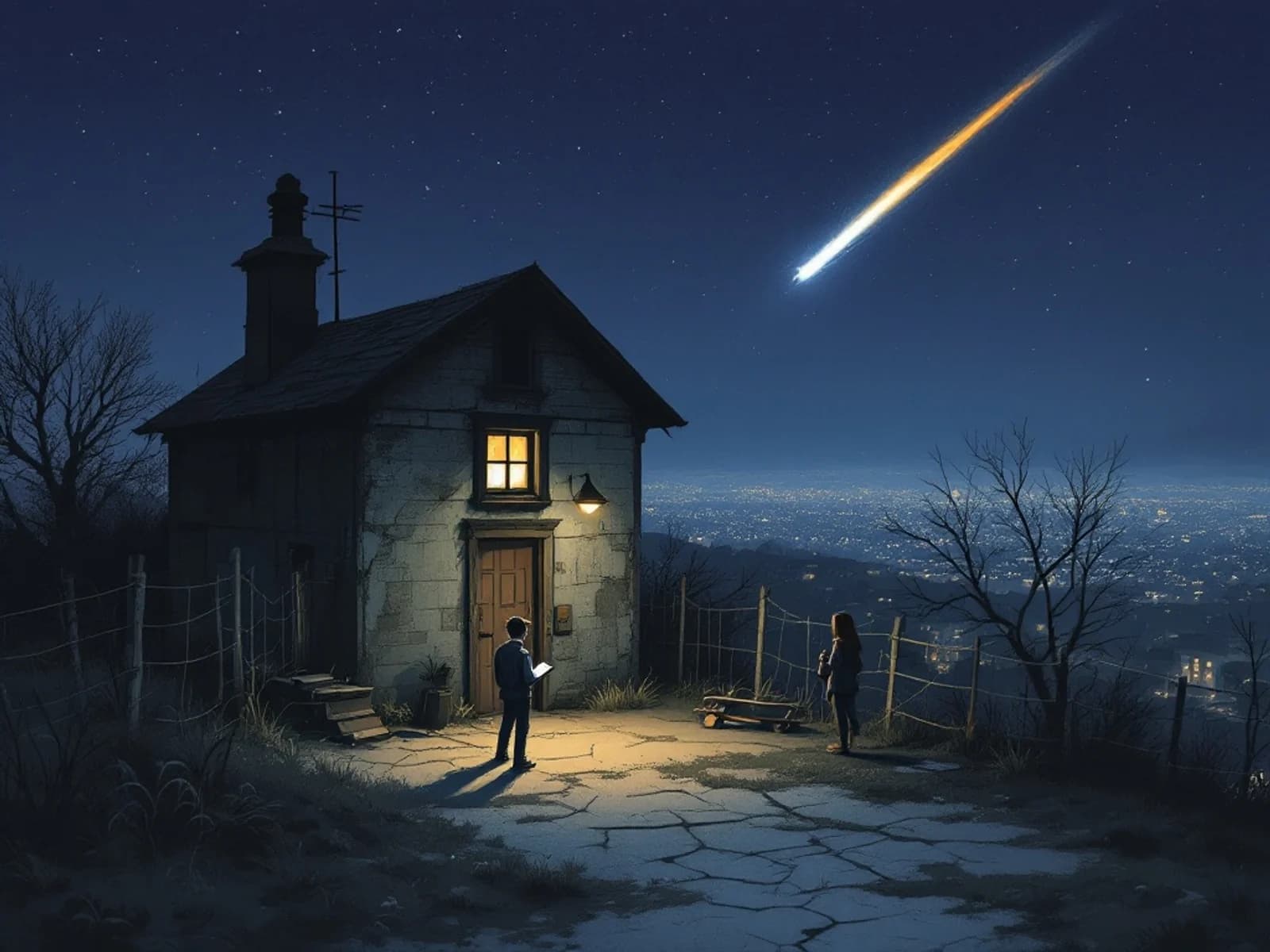
He had come to watch a meteor shower with his older cousin, Mara. The station had not sent railway signals for years. Its metal roof was rusted, its windows were boarded, and the platform below had long ago been turned into a wild strip of grass. But the hill was high and dark, and the sky above it seemed bigger than it did from town.
Mara was late. She had messaged: Five minutes. Do not climb anything stupid.
Ben had replied: Define stupid.
He was setting up the telescope when a light blinked from the station window.
Once.
Twice.
Then three times.
Ben looked down at his phone. No signal. He looked back at the window. The light had gone.
At first he assumed it was a car passing on the road below. Then it blinked again. One, two, three. A pause. One, two.
That was too regular to be a car.
Ben walked to the fence but did not climb it. The gate was chained, and the sign beside it said PRIVATE PROPERTY - NO ENTRY. He was not about to make the evening worse by becoming the kind of person a sign had been written for.
Instead, he took out his small notebook. It held skateboard tricks, telescope settings and one page of Morse code that Mara had taught him during a rainy holiday. Ben wrote the flashes down.
... pause ..
Then again.
... pause ..
"S I," he said quietly. That did not mean much.
The station light went dark. Above him, a meteor crossed the sky, quick and white. Ben almost forgot the window until he heard wheels on the tarmac.
Mara arrived with a backpack and a flask. "You did not climb anything stupid?"
"Not yet," Ben said. "But the station might be trying to talk."
Mara looked at the window. "That sentence usually leads to trouble. Show me."
Ben showed her the notebook. Mara did not laugh. She checked the sequence, then looked at the old building.
"Could be a timed security light," she said. "Or a loose wire. But you were right to write it down."
They waited. The light came back.
One flash. Pause. Two flashes. Pause. One flash.
"E I E," Mara said. "Not a word."
Ben frowned. He looked across the hill. On the far side, another small light was moving near the path. It was not a star. It was a person with a torch.
Then he understood. The flashes were not letters. They were directions.
Three steps. Pause. Two steps.
"Someone is trying to find the gate," he said. "The light is showing the safe path around the old platform."
Mara looked again. Beyond the fence, the ground dropped away near the tracks. In the dark, it would be easy to mistake the edge for a path.
They called out. The person with the torch stopped. It was Mr Vale, the caretaker from the town hall, carrying a toolbox.
"The station light is acting up," he called. "I came to switch it off before anyone follows it."
"It might be helping," Ben called back. "But it is not very clear."
Mr Vale came around to the outside of the fence. Mara showed him Ben's notebook. Mr Vale read it, then gave a small surprised laugh.
"That old lamp has a pattern controller," he said. "It was meant to mark the maintenance route. It probably reset itself in the storm."
He looked at Ben. "You noticed before anyone got near the drop. Good work."
Mr Vale used his proper key to enter the station grounds. From outside the fence, Ben and Mara watched him change the controller. This time the light blinked in a long, steady line towards the safe path, then went out.
"All sorted," Mr Vale said when he returned. "I will get the gate sign replaced tomorrow too."
The three of them stood quietly for a moment. Another meteor crossed overhead.
Mara poured hot chocolate into two metal cups. "You know," she said, "most people would have decided the flashes were nothing."
"Most things are nothing," Ben said.
"Yes," Mara said. "But checking is different from assuming."
Ben looked at the dark station, then through his telescope at the bright scatter of stars above it. The station had once sent messages across the railway. Tonight it had sent a smaller one, and he had been there to notice.
On the way home, he carried his skateboard under one arm and his notebook under the other. He did not need to find a grand answer for the whole night sky. It was enough to have answered one small signal carefully.
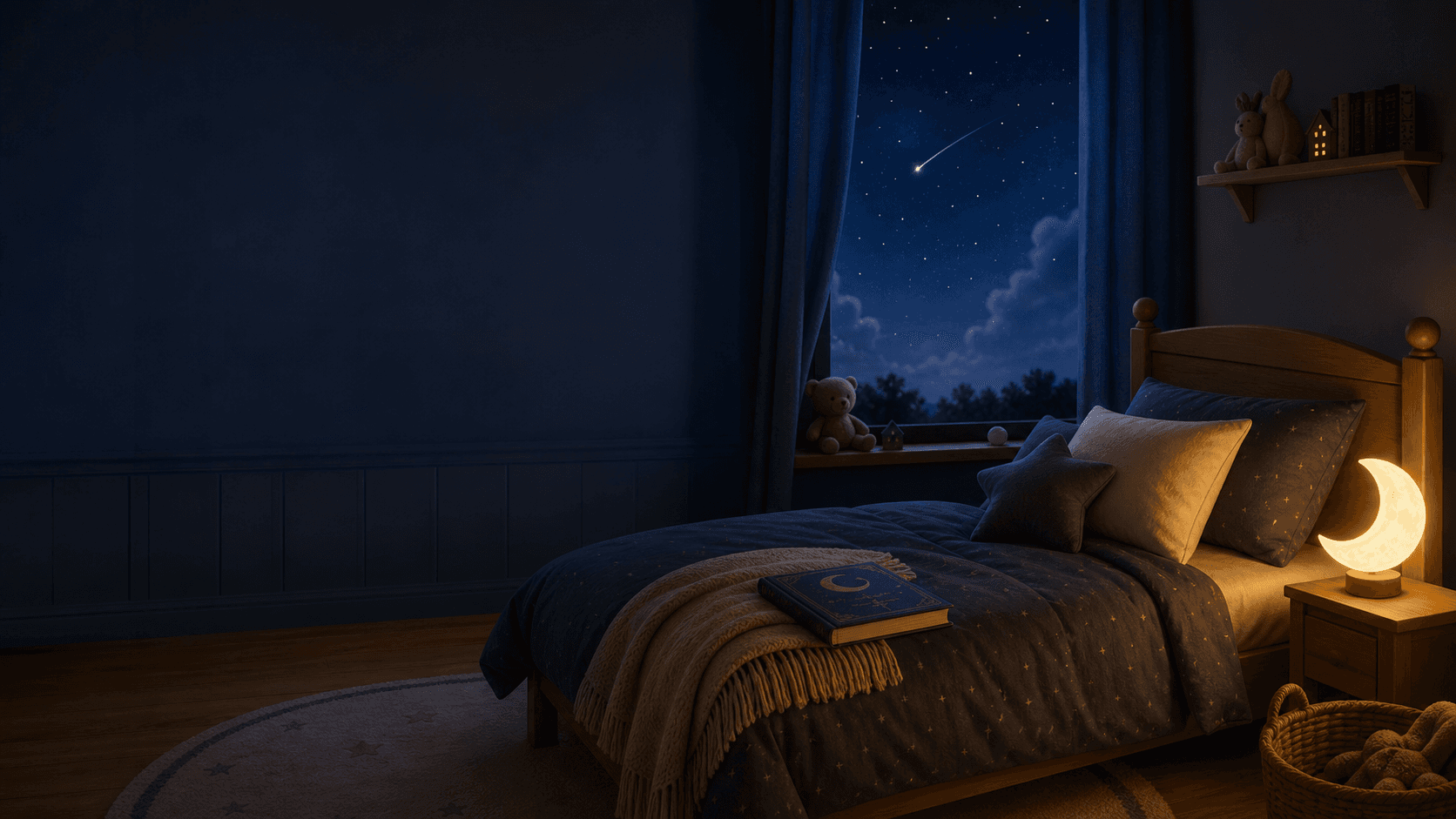
When he got into bed, the meteor shower was still happening above the hill. Ben could not see it from his room, but he knew it was there. That was a good kind of thought to fall asleep with.